I reckon it’s been three months since my last FTP test, and even at that, it’s possible I didn’t finish it or gassed out before I could.
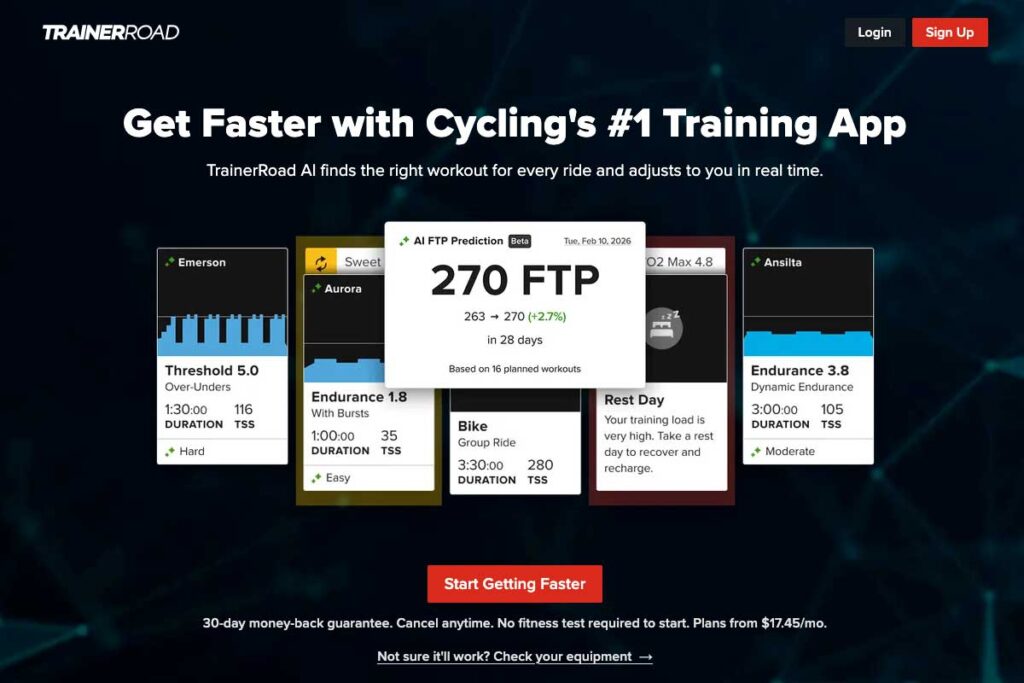
Having enlisted the use of TrainerRoad for the month of August, one of the first things you’re prompted to do is complete an FTP test, unless you want to go ahead and enter your details manually.
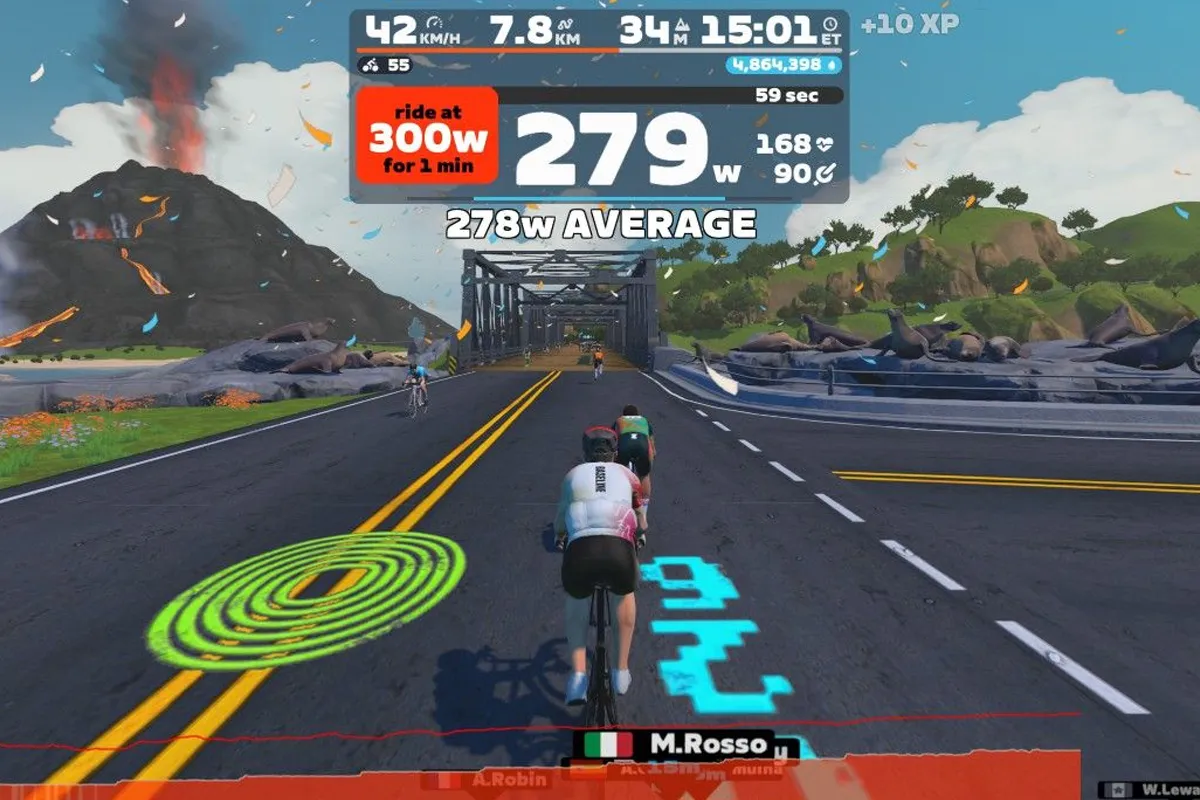
My peak number last year (May 2025) was 263w, thanks largely to a decent run up The Grade in Zwift.
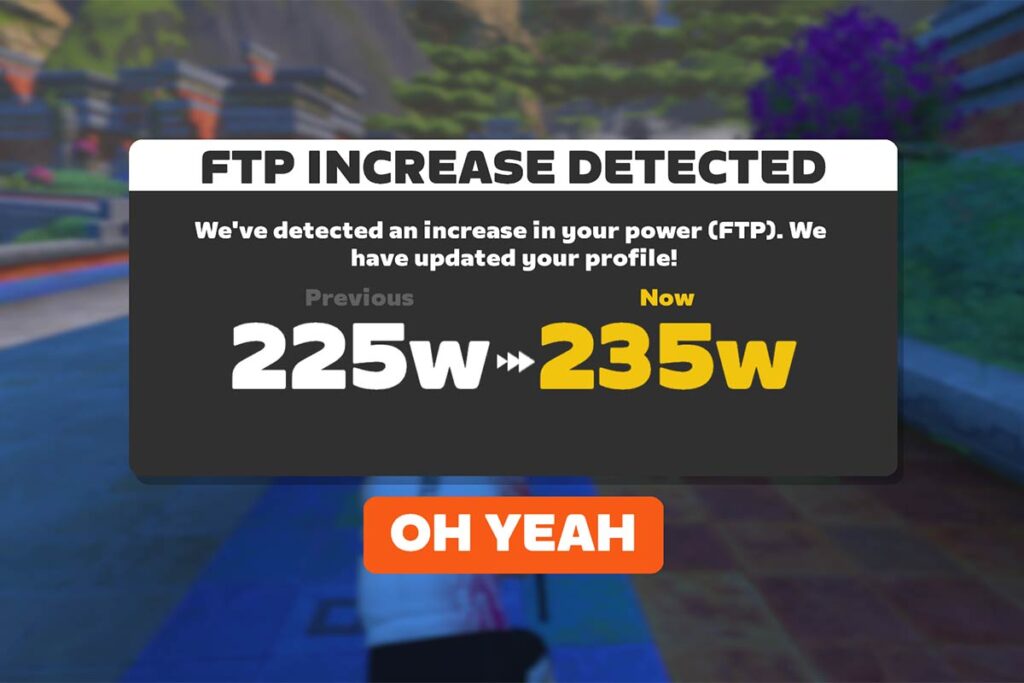
In January this year I started from 225w, brought it up to 235w in February, may have been as high as 249w by the end of the spring, dropping back down again to 225w or so by the start of the summer.
When it comes to FTP testing, much as with a driving test, a math test, a coding exam, a bleep test, once you know how to navigate it, you can get quite good at it. Rest up, fuel up, clear the head, off you go.
In my case, I hadn’t planned on doing a test today but figured it’s the right thing to do if I’m going to attack August in earnest and make the effort required to get myself back on track. So I did. As it turns out, I didn’t see the result coming.
What’s an FTP test?
While I’ll look at this in another post, if you’re not deep into the numbers side of cycling, here’s the short version.
Your FTP, or functional threshold power, is roughly the highest power you can hold for about an hour on the bike. That might take some considerable effort on your part, but it is what it is. Using that measurement means you can tailor your training zones appropriately for your recovery work, tempo work and top-end efforts, all coming as a percentage of this number.
TrainerRoad’s Ramp Test
Before I had even pedalled a warm-up, TrainerRoad had taken a punt on my FTP based on the access I had given it for Strava (which gets all my Zwift rides). June and July had been pretty light, and I’ve just come off a two-week holiday, so its AI estimation was an FTP of 196w.
To be honest, I’d take it, it’s a number from which to base my workouts off, but to get something more accurate, it’s into the ramp test. You’re given the opportunity to schedule one for any day you like, the results of the ramp test being used to set the zones for the training plan I’m working from for the next month.
Sure, 196w might sting a little given the high of 263w last summer, but it is what it is.
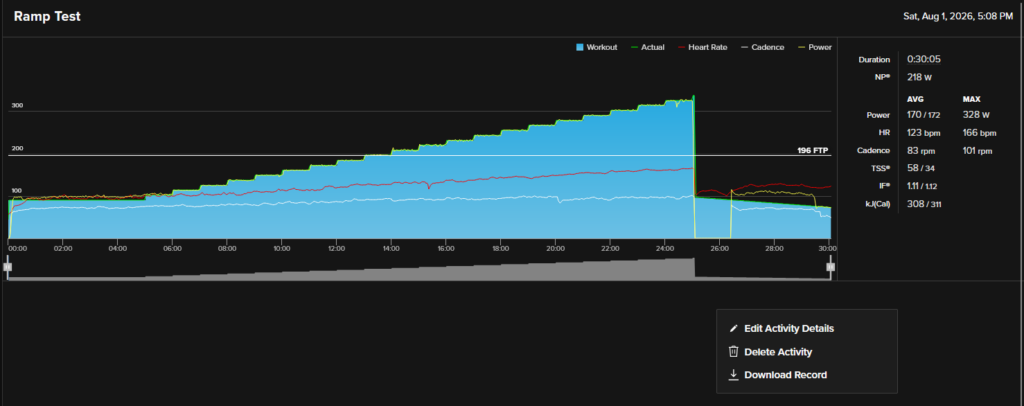
The test itself is simple in the way that ramp tests always are – deceptively easy at the start, and then not. The real pain work only comes at the end when you’re trying to push through, and even at that, there’s no sense in killing yourself once your numbers start to drop off or you can’t keep into the power target for your current minute.
This was also the first ramp test I’ve taken outside of Zwift, so there’s no getting sidetracked by shiny objects on the screen. It’s me, a graph that’s slowly rising to the right as I keep an eye on my current power, HR, cadence, targets and time. It’s earmarked for 25 minutes; I’ve got a five-minute warm-up, then a gradual increase in power every minute thereafter.
Ultimately, it’s less of a fitness test in the moment and more of a test of how long you can keep telling yourself ‘just one more minute’ before your legs or head make the decision for you. It’s been the latter for me for a while.
The result? Maxing out at 328w before calling it a day, leaving me with an FTP of 243w. That’s not just about the AI’s 196w guess, but higher than the 225w I would have called my honest current form, and closer to that year-old peak than I expected to be anywhere near. I won’t pretend I didn’t crack a smile having spent the previous six minutes telling the PC to go F itself, but I’ll happily take a number that’s trending in the right direction instead of the wrong one.
So how does the ramp test shape August?
Exploring TrainerRoad’s calendar, now synced to my iCal as well, I’ve now got all my training zones set for the graft expected of me for the month ahead.
Not only that, but if I hold up my end of the bargain, meet my goals and keep myself in check on the outside too, I could expect an increase of a further 10w in a month’s time. Whether that holds up is a different post entirely, but it’s given me a clear number to train towards rather than just vaguely ‘getting fit’.
If you want to work out where your own numbers land and get a handle on your training zones to make your own plans, I built a free FTP and training zone calculator available here.
Ken